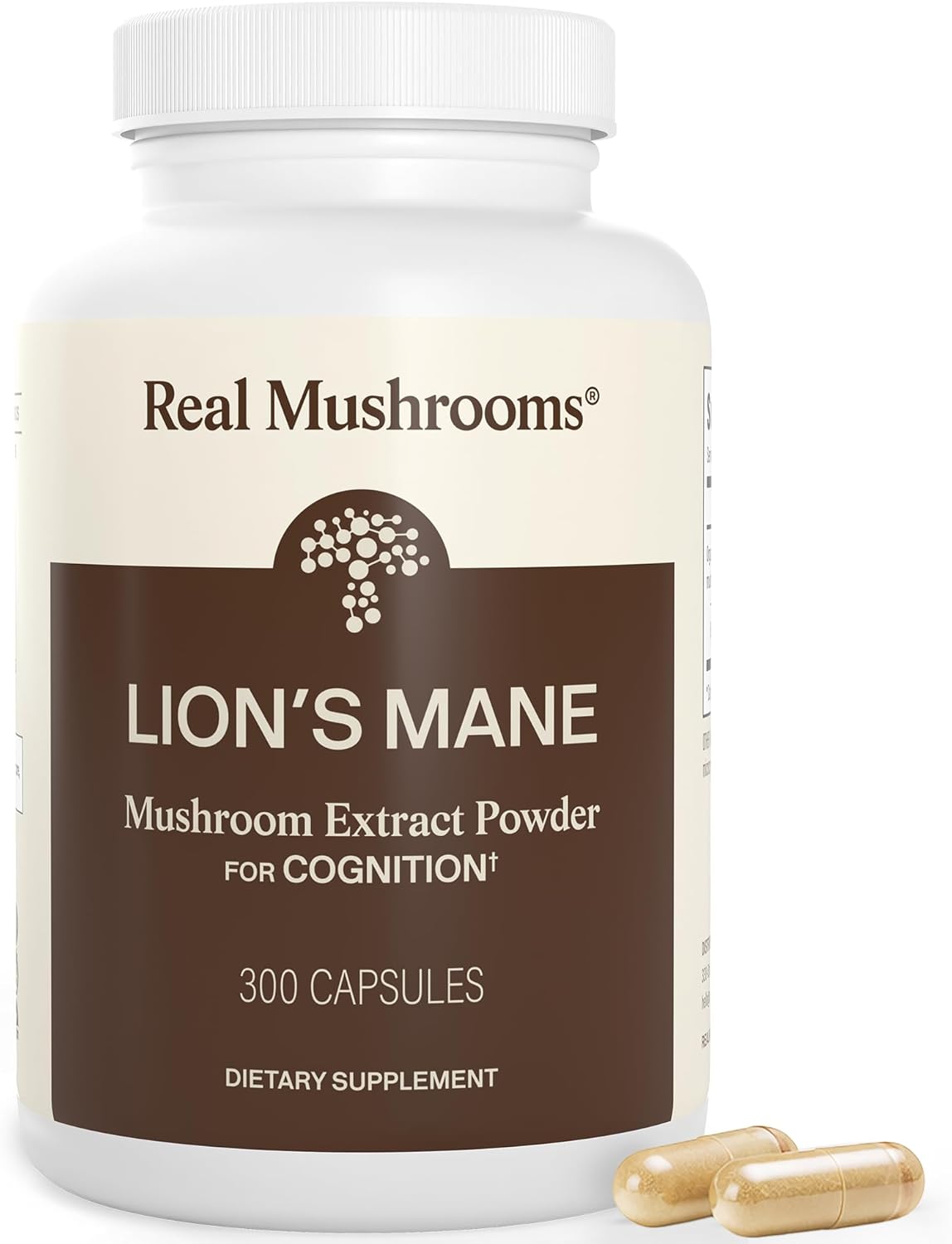
Lion’s mane is a mushroom, Hericium erinaceus. The internet sells it as a memory pill. The human trials are small, mostly in older adults or people who already had mild cognitive trouble, over weeks to a few months. Healthy 28-year-olds should expect less than the ad. What you can audit on a label is simpler: fruiting body, not mycelium grown on grain, and a beta-glucan number from a lab, not a polysaccharide number that counts starch.
Fruiting body versus grain
A lot of cheap “mushroom” capsules are mycelium fermented on oats or rice. The capsule is partly the grain. Beta-glucans are the fungal fibers the immune and cognition papers actually discuss. A brand that prints beta-glucans above about 25 percent and says fruiting body is playing a different game than a 10-mushroom blend with no assay. That does not make the cognition effect large. It means you bought the organism you named.
On cognitive performance this stays behind sleep, creatine, and not being drunk. Give it eight weeks if you are going to bother. If focus is unchanged, stop. It is not a stimulant. It will not replace caffeine, and it should not be stacked with three other “neuro” blends the same month.
Where it sits
On supplementation lion’s mane is a promising maybe with a quality trap. Allergy to mushrooms is a no. The evidence is early. The fruiting-body distinction is not early. Buy the one you can check.
This page is not medical advice. Amazon prices move. The affiliate link uses tag hackthatlife2-20.