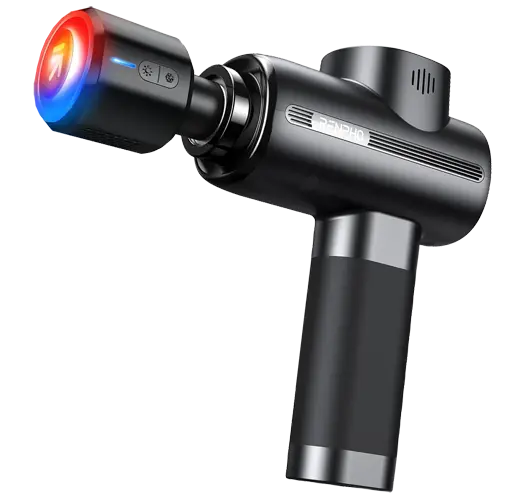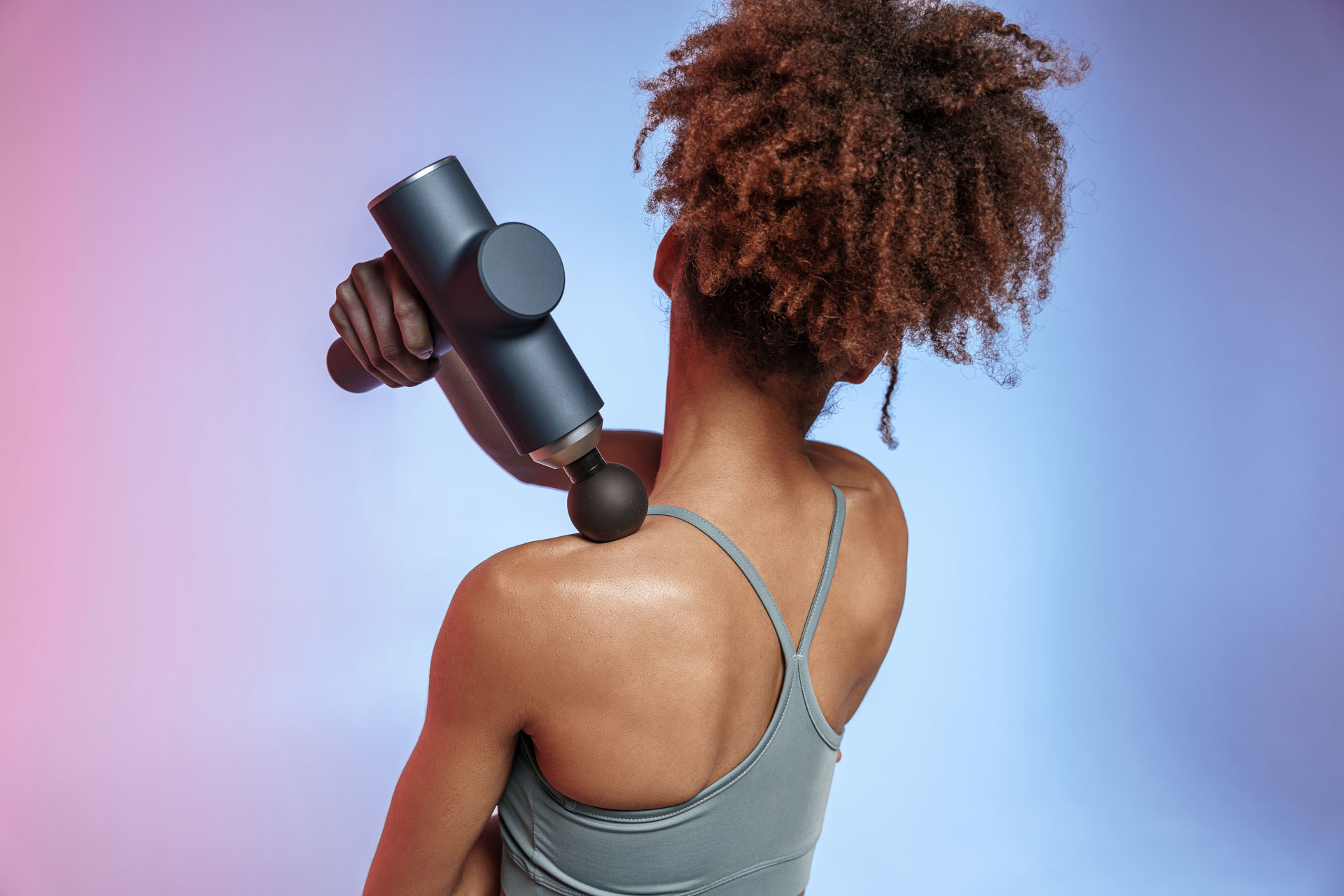
A massage gun delivers repeated mechanical taps through an attachment pressed against the body. It can feel different from hand massage or a foam roller, and many people find it convenient for a brief session. The useful question is what you expect that session to achieve.
Short-term comfort, a change in range of motion and faster recovery for the next workout are separate outcomes. Product advertising often puts all three under the word “recovery,” which makes comparisons harder than they need to be.
What does the research say massage guns do?
A systematic review found evidence suggesting some short-term improvements in flexibility or range of motion, with limited and varied research on other outcomes. Studies used different devices, exposure settings and populations, so there is no single routine supported for every purpose.
Feeling less stiff after a session can still be useful. It does not establish that damaged tissue has healed or that the muscle is ready for unrestricted training. Claims about breaking up scar tissue or removing toxins require evidence beyond a product demonstration.
Before a workout or afterward?
Start with the task. Before exercise, you may be looking for a comfortable way to prepare for movement. Afterward, you may simply want a short period of relaxation. Neither use should replace the warm-up, appropriate training load or recovery habits relevant to your activity.
If you experiment, keep the purpose and setup consistent enough to judge. Notice whether the movement you care about feels easier afterward, and whether the effect lasts. Avoid interpreting a pleasant sensation as permission to ignore a recurring problem.
How much pressure should you use?
Follow the manufacturer’s instructions and use a setting you can control comfortably. Do not make pain the goal. A device that encourages you to press harder because it advertises a high stall force is not necessarily better suited to your body or purpose.
Keep away from the head, front and sides of the neck, bony areas and injured or broken skin. Do not use a massage gun over suspected clots, new unexplained swelling or an acute injury. People taking blood thinners or with reduced sensation should get advice before use.
What features matter when buying a massage gun?
Weight and handle shape affect whether you can hold the device comfortably. Noise matters if you intend to use it in a shared space. Look at attachment materials, cleaning instructions, control at low settings, battery replacement or warranty options, and the total cost.
Amplitude and speed describe aspects of the device, but neither number proves better clinical results. A lighter product that is easy to position may suit you better than a powerful unit that is awkward to control.
When should you investigate pain instead?
Persistent pain, weakness, numbness or worsening symptoms deserve an assessment. Repeatedly using a gun to make the same area tolerable can delay understanding why it keeps becoming painful. A physiotherapist can help connect symptoms with activity and advise whether percussion is appropriate.
For broader recovery planning, review your training progression, sleep and the demands of the coming days. A massage gun can be an optional comfort tool within that plan; deciding what you need from it comes before deciding which model to buy.