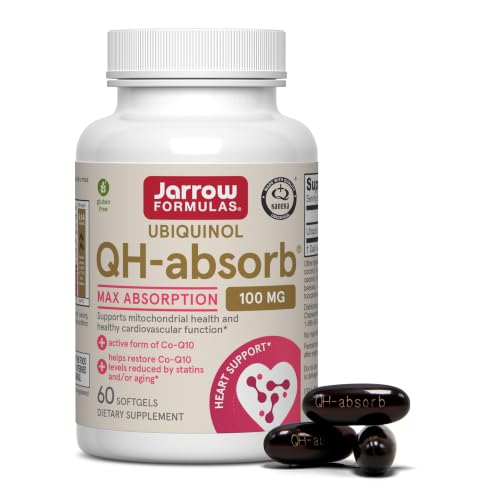
CoQ10 is a molecule your mitochondria already make. It lives in energy-hungry tissue, heart included. Production drops with age, and statins can lower it further. That is the entire honest sales pitch. The rest is dose, form, and not pretending a softgel is a cardiac drug.
Ubiquinone, ubiquinol, and the size of the effect
Ubiquinone is the oxidized form. Ubiquinol is the reduced form. The body converts one to the other. Older adults and people who absorb poorly often do better with ubiquinol, which is why it costs more. A 100 mg softgel is a nutrition dose. Heart-failure trials that moved anything used higher amounts, often 200 to 300 mg, on top of real treatment. Statin muscle pain has a mixed file: some people feel a difference, the trials do not all agree. If your lipids are the actual problem, this is not a substitute for the cardiovascular plan or for a statin your clinician already chose.
Take it with a meal that has fat. It is fat-soluble. Splitting the dose matters only if you are in the hundreds of milligrams. One softgel with breakfast is the ritual at 100 mg. Warfarin is the interaction to mention to the person who manages the INR. Pregnancy is a question for that clinician, not for a product page.
Where it sits
On supplementation this is a maybe, after vitamin D, omega-3, creatine, magnesium, and protein. On cellular metabolism it is the mitochondrial capsule people add when they are older or on a statin, not a metabolism hack. The absorption percentages on brand sites come from the company’s own pharmacokinetic work. They are not event trials. If nothing you can feel or measure has changed in a couple of months, stop spending the money.
This page is not medical advice. Amazon prices move. The affiliate link uses tag hackthatlife2-20.