
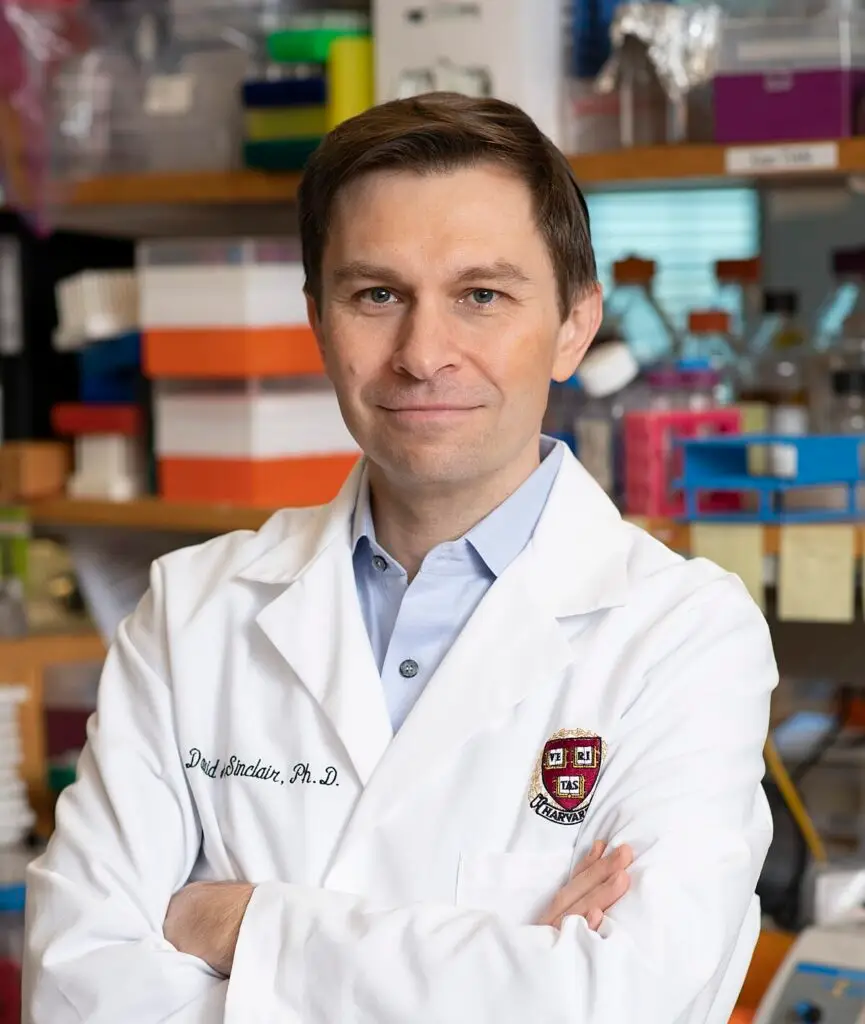
David Sinclair is a Harvard geneticist. Sirtuins, NAD+, resveratrol, the idea that aging is a program you can shove. Co-director of the Paul F. Glenn Center for Biology of Aging Research. The public book is Lifespan (2019). The slide that stuck: the genome stays mostly intact while the epigenome, the cell’s job description, gets noisy with time.
From that story you get NAD+ boosters (NMN, NR), sirtuin talk, and later chemical reprogramming. You also get a consumer industry that heard “Harvard” and “NAD” in the same sentence. The more careful version is narrower. Energy metabolism and DNA repair are coupled. A trained, not-constantly-fed cell does not behave like a sofa cell. Exercise, a bit of hunger, heat, cold. Hormesis. That part overlaps Attia and Hof without being their program. Sinclair is making a molecular argument. They are making a training argument and a nervous-system argument.
Biological-age clocks show up in his orbit. Use them as a yearly trend if you like gadgets. They are noisy as a weekly grade.
He founds and advises longevity companies. That sits next to the science whether the slide deck says so or not. Human data for NMN and resveratrol as anti-aging drugs is thinner than the keynotes. Resveratrol in particular never delivered the 2000s magazine version. Yeast and mice are not a reason to empty a paycheck into a capsule.
Keep the frame for longevity: aging has levers, NAD+ is part of the conversation, lifestyle stress is the unsexy base. Put money into training, sleep, and protein before you put it into a poorly absorbed powder with a campus in the ad.