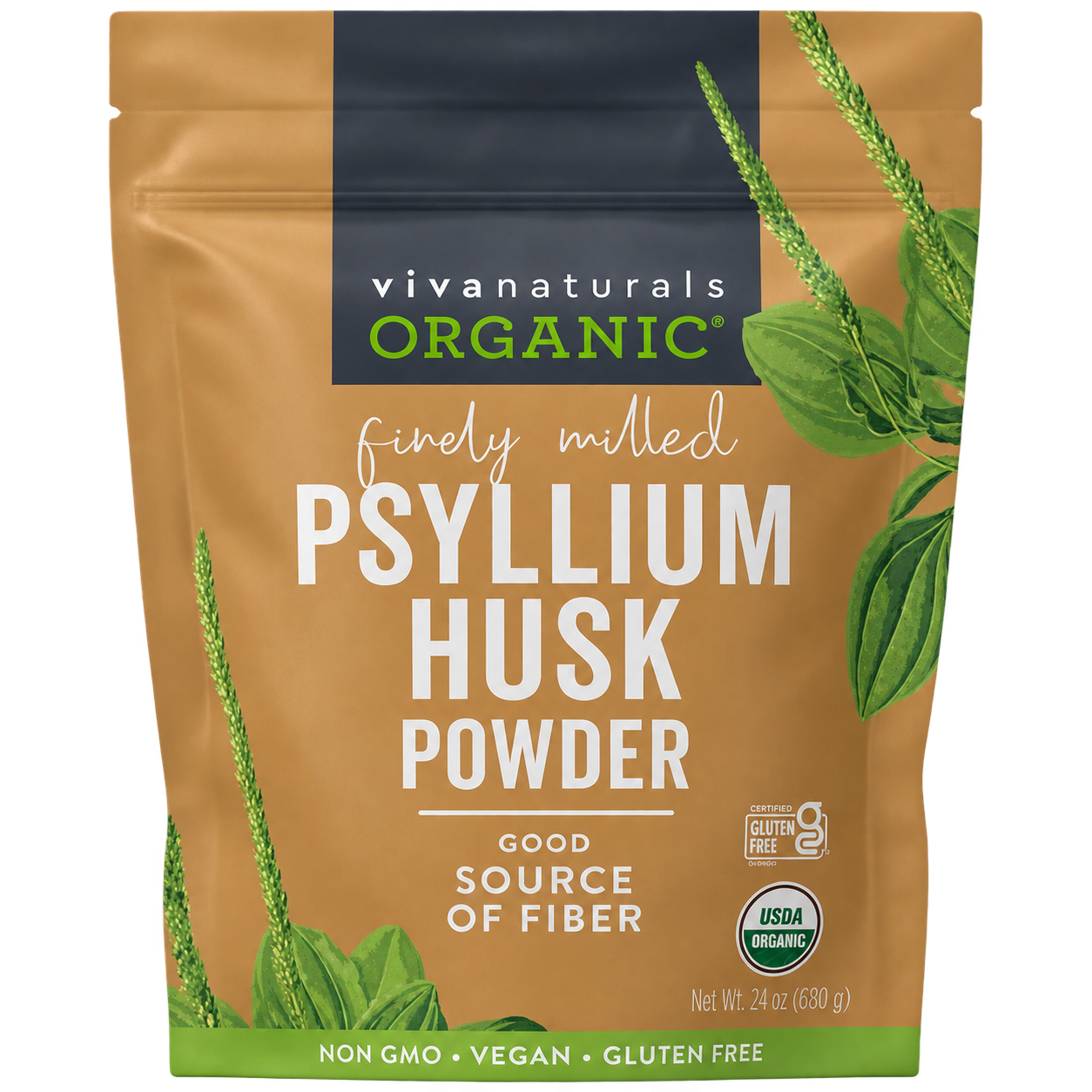
Psyllium husk is a fiber derived from the seeds of Plantago ovata. It absorbs water and forms a gel. That physical property explains both its usefulness as a bulk-forming fiber and the importance of taking it with the liquid specified on the label.
Viva Naturals psyllium is the product in this entry. Check whether you are buying whole husks, a more finely ground powder or capsules, because texture and serving instructions can differ.
What does psyllium do in the digestive tract?
By holding water, psyllium adds bulk and changes stool consistency. It is used for constipation, with instructions that need to be followed carefully. Some people also consider soluble fiber in broader nutrition or cholesterol-management discussions; those purposes should be evaluated with appropriate guidance.
Fiber intake from meals is still worth reviewing. A powder can add a particular fiber, while legumes, fruit, vegetables and whole grains contribute a wider mixture of nutrients and fibers.
How do you mix psyllium safely?
Follow the package’s mixing instructions and drink the mixture promptly as directed. Do not swallow dry powder. Psyllium thickens as it absorbs liquid, so guessing at the water amount can create a swallowing problem.
People with swallowing difficulties or suspected bowel obstruction need medical advice rather than self-treatment. Breathing or swallowing difficulty after taking it requires urgent attention. MedlinePlus describes these precautions and other situations to discuss with a pharmacist.
Whole husk, powder or capsules?
Powder can be convenient for measuring a serving but has a noticeable texture. Capsules avoid mixing, although several may be needed to supply the labeled amount. Count grams of fiber per serving and the liquid required for each format.
If texture is the main obstacle, PHGG is another fiber to understand. It behaves differently in water, and its evidence should be considered separately. Choosing a tolerable format matters because consistency of use affects practicality.
Gas, medication timing and persistent symptoms
Increasing fiber can cause digestive discomfort, particularly when intake changes abruptly. Review how much you already get and follow a gradual approach appropriate to the label and your situation. A pharmacist can advise about spacing psyllium from medicines that may be affected.
Do not keep increasing the serving to manage unexplained symptoms. Persistent constipation, bleeding, significant pain or a major change in bowel habits deserves assessment. The gut-health pillar provides the wider context for understanding those concerns.
Sources and further reading
Where to find Psyllium husk
View on AmazonSee the listing, current price and customer reviews on Amazon.
Affiliate link · HTL may earn a commission on purchases.