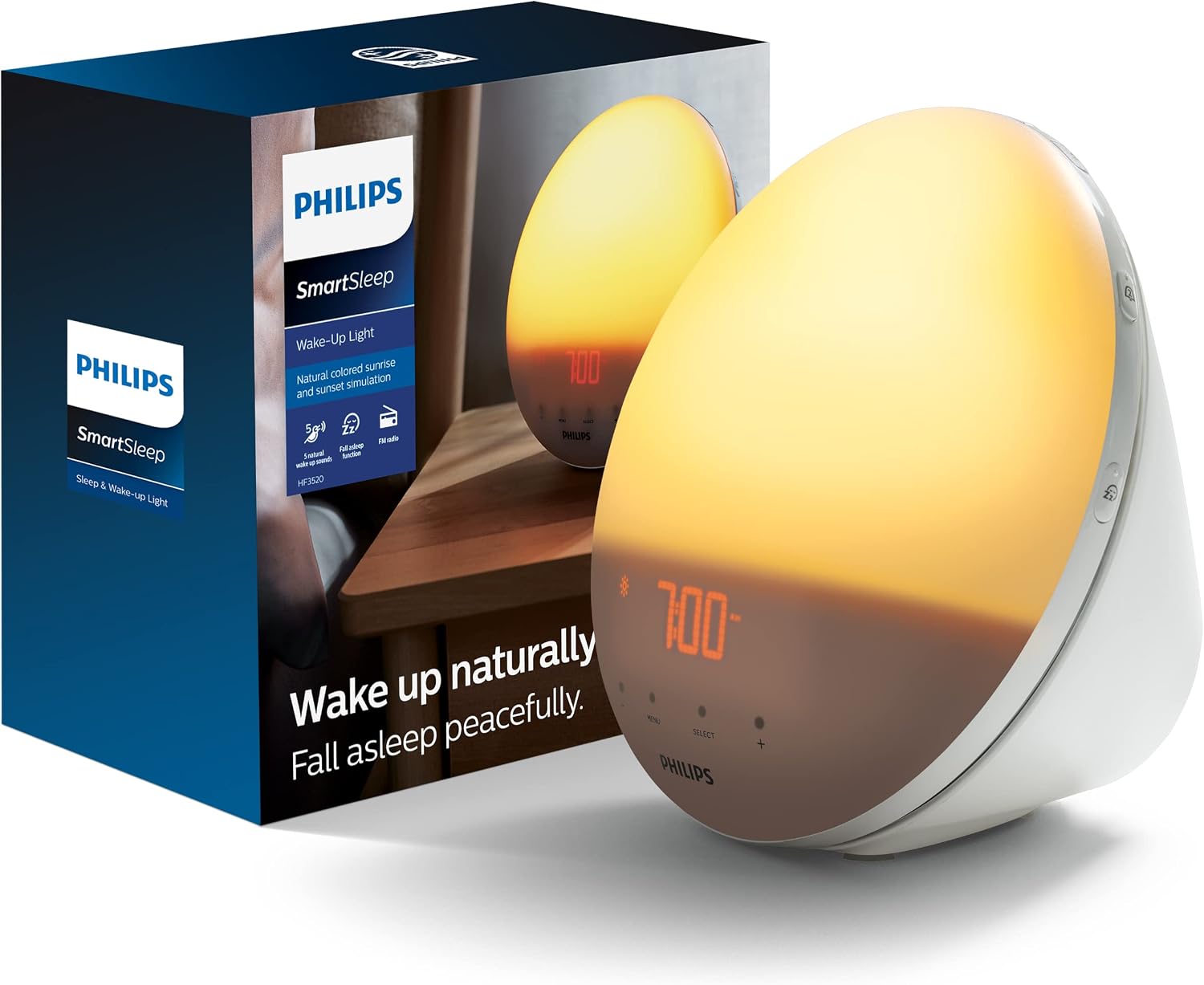
A healthier home does not have to look like a laboratory. Start with the conditions you repeatedly notice: a bedroom that stays bright, a noisy window, cooking smoke that lingers or a room that feels uncomfortable at night. Each gives you a specific problem to solve.
This approach also makes purchases easier to judge. You can ask whether a device addresses the problem, how you will use it and whether a simpler change would do the same job.
Make the bedroom easier to sleep in
NHLBI recommends a quiet, cool and dark bedroom as part of healthy sleep habits. The practical details depend on your space. A light-blocking curtain may be useful for a street-facing window; a small indicator light may simply need to be moved out of view.
Think about noise sources before adding another sound. Appliances, notifications and gaps around a door may offer straightforward adjustments. If you use masking sound, choose a comfortable level and consider whether it is helping rather than assuming louder is better.
A comfortable environment supports sleep, but it cannot explain every sleep problem. Persistent insomnia, breathing pauses or major daytime sleepiness deserve assessment.
Where should indoor air improvements begin?
EPA guidance puts emphasis on controlling pollution sources and ventilation with clean outdoor air where appropriate. Filtration can complement those steps. An air cleaner cannot make ongoing smoke, moisture damage or another source irrelevant.
Identify what you are trying to reduce. Cooking particles, wildfire smoke and allergens raise different practical questions from a gas leak or carbon monoxide. A purifier is not a substitute for appropriate alarms, repairs or emergency action.
How do you choose an air purifier?
For particle filtration, compare the clean air delivery rate, or CADR, with the room size and intended use. Check performance at a noise level you can tolerate; the highest-speed specification may be less useful if you never run that setting.
Health Canada discusses portable units and particle removal, including HEPA filtration. Filter replacement costs, availability and the ability to run the device consistently matter. Avoid equipment designed to generate ozone in occupied spaces.
Place the unit according to its instructions with unobstructed airflow. Before buying several devices, identify which room is the priority and whether doors are usually open or closed. A clear plan makes a specification sheet easier to interpret.
Do you need air-quality or sleep sensors?
A sensor can be useful if it will inform a decision. For example, a particle monitor may help you notice how cooking or outdoor smoke affects a room. Different sensors measure different things, and consumer readings have limitations.
Write down what you would change in response to a reading. If the answer is unclear, collect less data until the question is clearer. The same applies to a sleep tracker: a nightly score is useful only when you understand its limitations and how it fits your experience.
Make one change you can evaluate
Choose a manageable adjustment, such as reducing bedroom light or improving the way cooking emissions are handled. Note the conditions before and after. Keep expectations specific: quieter, less visible glare, fewer measured particles or greater comfort.
This is a practical home-improvement process rather than a promise to optimize every health marker. Use the sleep and heart and breathing pillars to connect the environment with the wider habits and medical questions that matter to you.