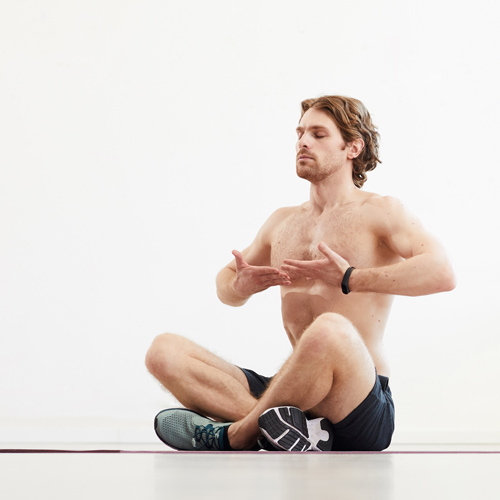
Breathwork covers a surprisingly wide range of activities. Quietly following a comfortable breathing rhythm is one version. Rapid breathing, long breath holds and intense group sessions are others. They should not all be treated as the same practice or given the same safety advice.
If your goal is to settle after a stressful moment, a gentle exercise is the more straightforward place to explore. You can pay attention to breathing without forcing unusually deep breaths or trying to tolerate discomfort.
Why might slower breathing feel calming?
Breathing and the nervous system influence each other. Deliberately changing a breathing pattern can alter physiological arousal and the experience of stress. That gives researchers something to investigate, but it does not mean every technique has a proven effect on every health problem.
A 2023 meta-analysis found an association between breathwork interventions and lower self-reported stress, while highlighting limitations in the evidence. A separate randomized study compared brief daily breathing exercises with mindfulness meditation over a month. These findings support further interest in short practices; they do not establish a universal protocol or a treatment for a psychiatric condition.
Slow breathing, box breathing and cyclic sighing
Slow breathing usually means reducing your breathing pace while staying comfortable. Box breathing divides the cycle into inhalation, a pause, exhalation and another pause. Cyclic sighing, as studied in the trial linked below, emphasizes a longer exhalation after a particular inhalation pattern.
Those descriptions help you recognize the terms. You do not need to try every pattern or complete a prescribed count when it feels strained. An exercise that creates air hunger or dizziness is giving you a reason to stop, not a reason to prove your determination.
Trying a gentle breathing pause
Sit somewhere safe and let your shoulders rest. Notice a few ordinary breaths before attempting to change anything. If comfortable, allow the exhalation to become a little slower, without pushing out every last bit of air. Keep the next inhalation easy rather than taking the largest possible breath.
Try a brief period and then return to ordinary breathing. Pay attention to whether you feel more settled, unchanged or uncomfortable. This is an informal way to explore your response, not a diagnostic test. If focusing on breathing increases panic, another grounding activity or professional guidance may suit you better.
When breathwork becomes a different risk
Rapid breathing and prolonged holds can cause dizziness or loss of consciousness. Never combine them with water, a cold plunge, driving or another situation where fainting could be dangerous. Online demonstrations can obscure how much supervision or preparation a particular practice requires.
Existing heart or lung conditions, pregnancy and a history of fainting are reasons to seek individualized advice before intensive methods. New or unexplained breathlessness needs medical assessment rather than a breathing challenge.
Do you need equipment?
A timer or a simple audio cue is usually enough for a gentle attention-based exercise. Choose tools according to the task rather than the size of the promised transformation.
Breathing through a resistance device is a separate activity called respiratory muscle training. It aims to train breathing muscles. A meditation app, a resistance trainer and a breath-hold course therefore deserve different comparisons, even when all three appear under the word “breathing.”